The visitors’ ultimatum
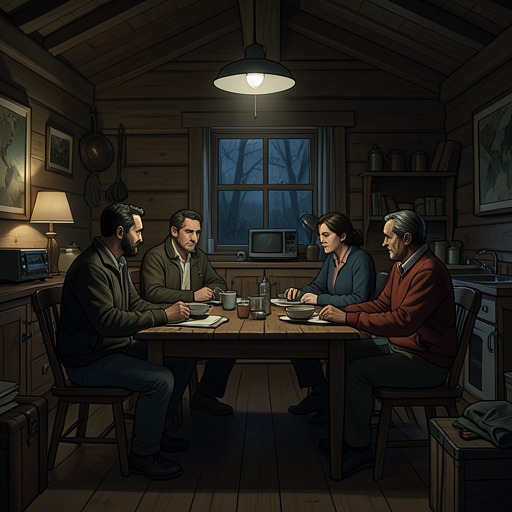
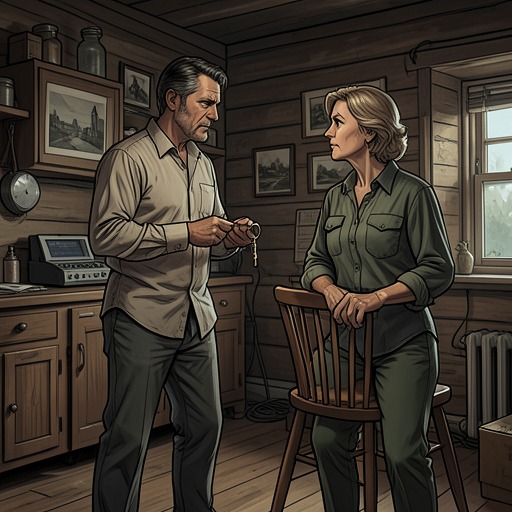
The Cabin at the End of the WorldThe visitors’ ultimatum is the demand that turns a claimed warning of apocalypse into a forced decision for Andrew, Eric, and Wen. Leonard presents the family’s choice as the only way to avert the end of the world, but the visitors also keep them at The cabin and insist that the family, not the visitors, must make and carry out the sacrifice. The gap between a choice in form and a decision made under confinement and an immense threat defines the event.
The Message and Its Claim
Leonard explains that the four visitors have come to prevent the apocalypse and that everyone in the cabin can help stop it. He says the message was difficult for him to accept at first, but that he came to believe it was true regardless of whether he considered it fair. The visitors present themselves as messengers or as a mechanism through which the message must pass, rather than as the authors of the demand.
The ultimatum then specifies what the family must do: choose one of its three members to be sacrificed and kill that person. If the family does not choose, or does not follow through, Leonard says the world will end. He distinguishes the family’s fate from everyone else’s: Andrew, Eric, and Wen would survive long enough to witness the devastation, while more than seven billion other people would perish. The scale of the threatened consequence makes the decision at once intimate and global.
Who Must Choose and Act
Leonard says the visitors cannot select the person to die and cannot perform the act on the family’s behalf. The family must make the choice and physically carry it out. The visitors’ account therefore places responsibility for the sacrifice on the people under threat, even as the visitors define the terms and consequences of refusing.
Leonard promises that the visitors will not kill Andrew, Eric, or Wen or otherwise harm them further, and says they will make them as comfortable as they reasonably can. That assurance is conditional in practice: the family must remain at The cabin until it chooses or the allotted time runs out. Leonard says time is short, without giving Eric a clear duration when Eric begins to ask. The promise of restraint does not restore freedom to the family; their alternatives are presented within continued confinement and a deadline.
Repetition, Delay, and Response
After the family has seen news coverage of a devastating earthquake and tsunami, Leonard restates the demand. He calls the choice a gift and says the family will be offered it again the next morning: they can choose a sacrifice and save the world, or let the clock move closer to what he calls permanent midnight. He says the visitors will meet their needs within reason and otherwise leave them alone to reflect and talk. He repeats the statement immediately, matching its wording and delivery, turning the ultimatum into a rehearsed formula rather than an open discussion.
The family does not accept the visitors’ framing. When Adriane appears to press the issue, Eric tries to prolong the conversation by asking her about the restaurants where she used to work. She slows, removes a mask from her hand, and hides it behind her back, but the visitors do not engage with Eric’s attempt to talk about their former lives. His delay shows the pressure of the demand without resolving it: the family has not made the required choice.
Continuing Uncertainty
Later, Andrew asks Eric directly whether he believes one of them must be killed by another to keep the world from ending. The question shows that the ultimatum remains unsettled even after the disasters reported on television: the danger appears harder to dismiss, but the visitors’ explanation has not become an accepted necessity. The event’s central conflict is therefore not only whether the family will comply, but whether a decision made under these conditions can be treated as willing at all.